In this article
Executive Summary
In the Software as a Service (SaaS) world, customers want a tool that contributes value to their output, a product that works with their iteration continuously and seamlessly. The product provided as SaaS must fit the customers' expectations on value and Success at the same time. Customers' Success is at the heart of the SaaS business world. Customer Success does not just mean a single department or team; it's a behavioral pattern each department or unit should adopt. Therefore, each team should serve by giving value to the customer that helps their iterations.
In the SaaS world, conventional inputs like NPS and CSAT are insufficient to understand that a customer has achieved value with the tool. Like in the tests, each customer's behavior needs to be graded in two different categories; Product Engagement (Utilization of Features, Self adaptability, Usage of Documents, Set Integrations, ) and Healthy Communication (NPS, CSAT, QBR Reports, ). Each interaction made with a customer has to be taken into account. SaaS business is an opportunity to monitor each customer's movement throughout their journey. It allows you to maximize the output, Customer Lifetime Value (CLV) that will give to your Net Recurring Revenue (NRR).
The article focuses on the journey of a customer utilizing a SaaS, metrics to understand the customers' behavior, and how a SaaS product achieves Success by aiding its services to the customer to obtain their value.
Understanding the Success in a SaaS
SaaS means a product with continuous iterations is flexible and adaptable to your needs and seamlessly integrates with other products you need to optimize your operational capacity. To understand these traits, service providers must be a shadow of their customers, following and learning their behavioral pattern inside of the product and understanding what kind of an output they want to have by using the product, simply the value. The value is not static and will continuously evolve by following the customers’ operative ability. As an example, If the staff grows to 15 from 5 employees, the product has to have the ability to handle complex user management or introduce new integrations according to the companies’ needs to achieve the desired value.
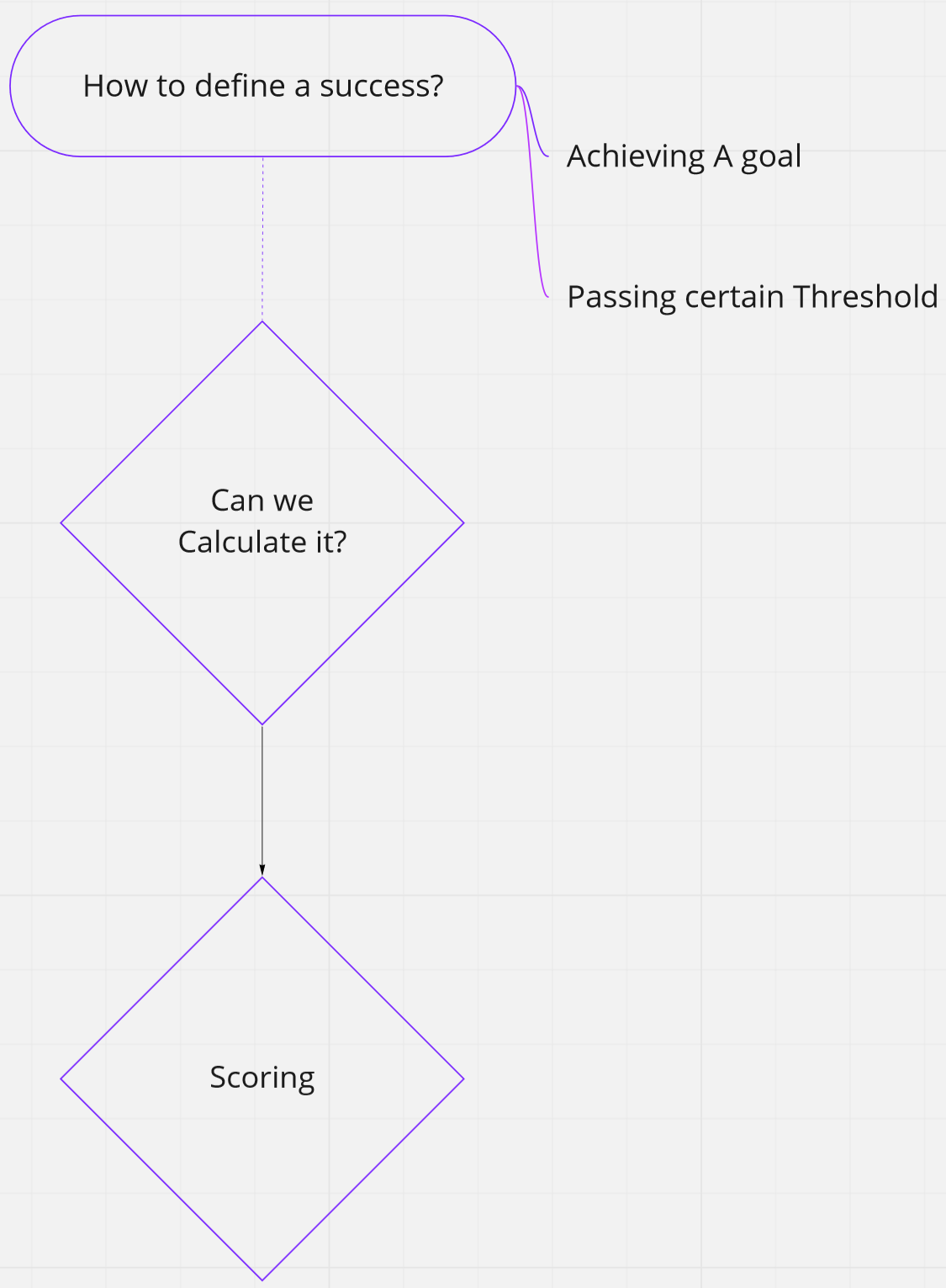
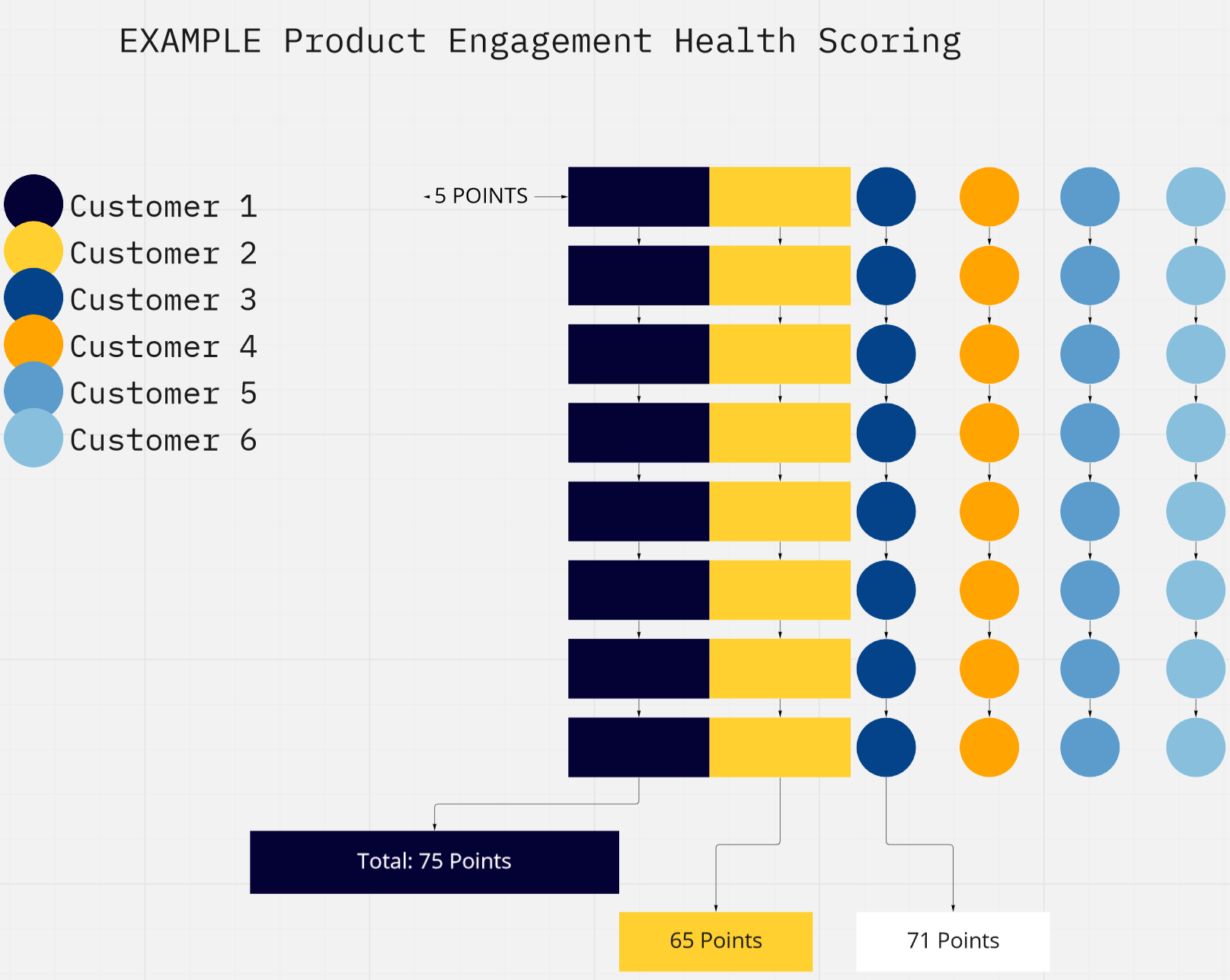
Understanding the path to the value comes with iteration, which means a successful improvement. Success can be defined in various ways, according to your adoption, grading each movement like in tests or defining thresholds for each breakthrough (To achieve that, they must build this, ). The article strongly suggests creating a grading/scoring structure to create a more concise progress report.
Customers’ Journey in a Pipeline
To create a system that can streamline the customer flow in the journey, creating a pipeline is always a great idea. A streamlined process is much more manageable; easy to set thresholds and breakthrough points, and this gives a great chance to sterilize the data that could be obtained from the customers' behavior. The article will explain a three-phase pipeline. Still, you can increase or decrease the phases as you wish.
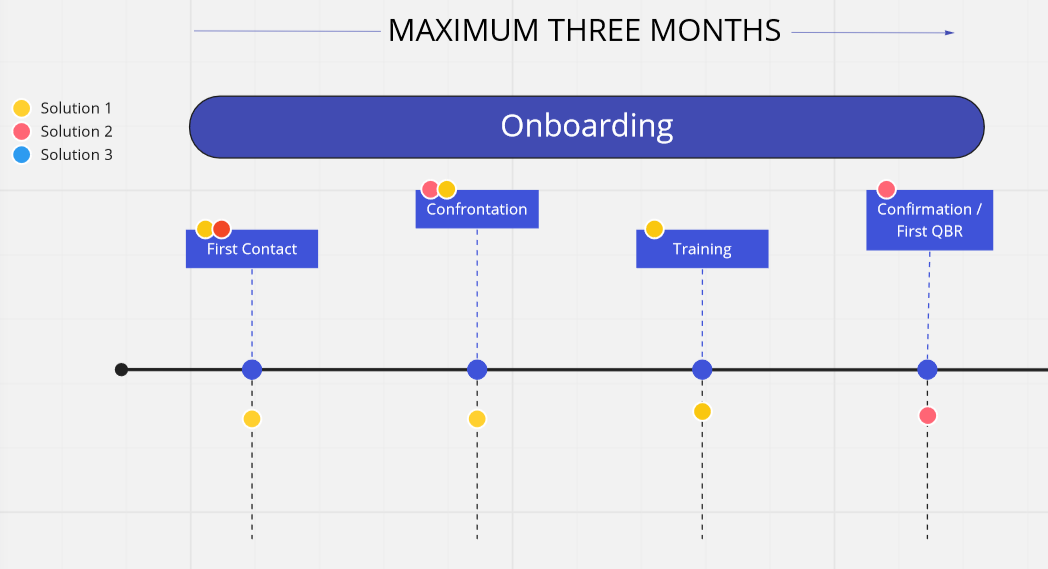
Phase 1 - Onboarding
When an opportunity becomes a customer, their journey starts with an onboarding procedure. The procedure could have different aspects or stages according to your services. Still, this is the phase that customers will have the first touch with your organization as a customer, not as an opportunity. We can divide the step into four stages;
First Contact; After their license activation, the customer will interact with your service for the first time as a customer (In demos and PoC, they are an opportunity, not a customer yet). The communication method could differ depending on the customer classification (SMB-Enterprise). Still, in first contact, the customer has to receive the information that they need to contact in need like program manager or support, First contact is a warm welcome with ensuring they will be with your team alongside their journey.
Confrontation; After a warm welcome, you need to walk through the program you will apply to them with the solution. Having access to a solution is not enough to produce value. Therefore, confrontation needs to summarize customers' journey, how they will achieve value, and what hints/tips will make their life more accessible. This stage can be done with an email or an article, or if it's an enterprise-level customer, the Adoption Manager or Solution Architect can walk them through it with slides and presentations.
Training; Therefore, what they have seen in Proof of Concept (PoC) and their WoW points must become a reality upon customers’ interaction with the service presented. The service provider must set up a training program to experience the moments by their hands. Whether with interactive guides or sessions with the team, the program must give the necessary skills to use the service independently. The program could be enhanced with an Adaption Manager or Solution Architect; however, these are enterprise options; the most commonly used methods are interactive guides, automated emails with support documentation for beginners, and video training.
Confirmation; After the customer has completed the training, you must confirm their knowledge in two different forms;
Verbally: Talk to them in QBRs (Enterprise Level) or send them automated emails on their questions after they have finished a session with your team or interactive guides.
On Data; Check the product data to see what they have accomplished and whether they have applied the actions they have learned with training or not. The time taken for accomplishments is irrelevant; the article looks at them during the adoption phase.
The Confirmation stage is a great time to do that if the service provider has a dedicated Customer Success team that will conduct a QBR. Ask them about their training, first contact with the team, and the solution. Just ask the right questions and let the customer answer. Every input you took from this stage will affect the Adaptation phase ultimately.
Phase 2 - Adaptation
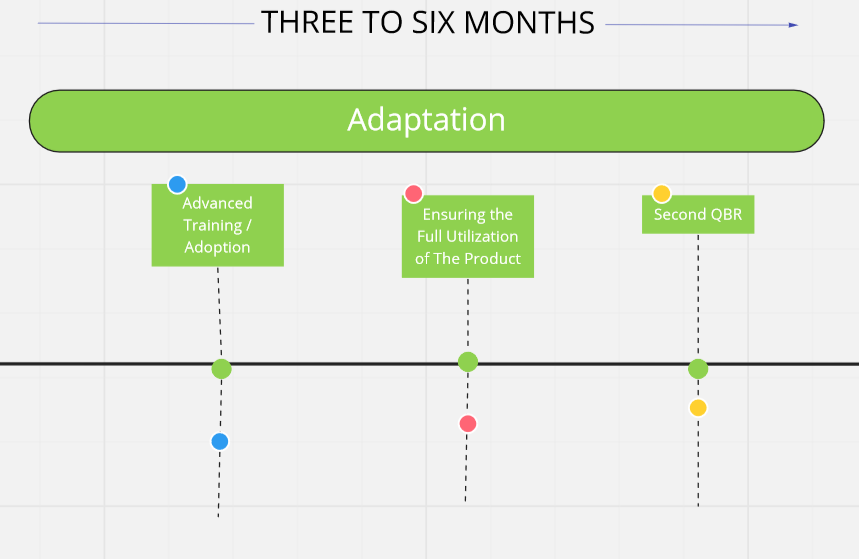
Onboarding is not enough for full utilization of the service. The SaaS itself is a continuous forward movement, an iteration. Therefore, adaptation to the service is a must. While the customer adapts the service, they will adjust their team, system, or infrastructure if needed. At the same time, the service will adapt itself, too, with features like scheduling, API automatization, and User Management. To make a systematic approach, we can look into the Adaptation phase in three stages;
Advance Training / Adoption: Advance training/Adoption aims to teach the features that will help adapt the service to the customer's workflow. In the first training, they learned how to reach their achievements and use the solution as a Minimum Viable Product.
Ensuring the Full Utilization of the Service: In this phase, they will master the abilities of the service and adopt it to their workflow, and by the end of this phase, the service must be an inseparable part of the customers' processes. That means; scheduling, automation, integrations, user management, and optimizations at their highest. In this phase, having a Solution Architect or Adoption Manager creates an excellent advantage for the customer; generally, it's only valid for Enterprises.
Second QBR / Phase in Wrap: QBR or Wrap emails are fantastic ways to finish this phase. If the customer has a Customer Success Manager/Solutions Architect/Adoption Manager in their package, they will receive a bunch of data and expansion ideas tailored for them. On SMB's side, they can receive a report from the email about their performance and what they can improve.
Phase 3 - Expansion
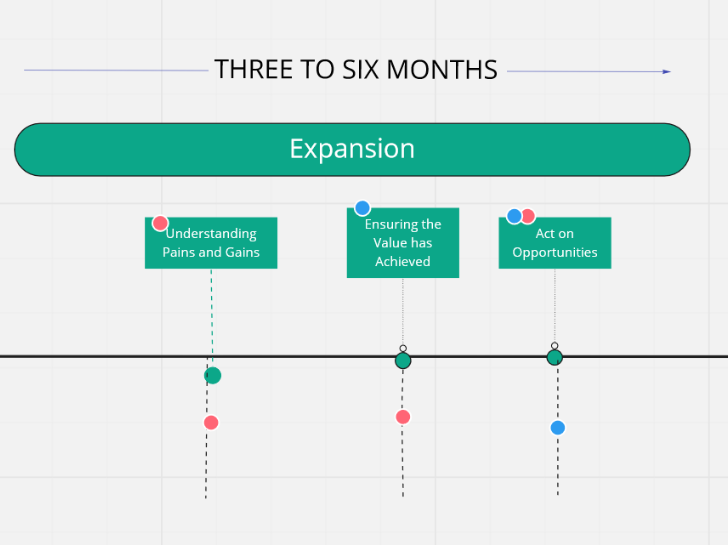
The phase of expansion reveals opportunities for both customers and service providers. Unlocking the full potential of the service is not the end for a SaaS. As said in the first chapter, SaaS it's a continuous improvement; iteration. Therefore, both sides need to look for new opportunities to get more and earn from this customer/service provider relationship. On the other hand, it's the perfect phrase to reveal the customer's emotions about the relationship, whether they will churn or become an advocate for the service. This phase can be inspected under three topics;
Pains and Gains: From the first two phases, the service provider has enough experience and data to understand and decide on pains and gains for parties. Starting from this phase, the service provider starts to get feature requests or pains that are caused by not reaching the value.
Ensuring the Value has Achieved: The stage explains itself. Both parties have to be sure that the initial, expected value is achieved, and the relationship can move forward with new opportunities, ideas, and furthermore. If it's not achieved, this is the only timeline until the Renewal phase to act on pains causing deterioration. There will not be much time to develop features that could make WoW moments or present a new value to the customer.
Act on Opportunities: Successfully passing the first two stages, both parties will look out for more to get out of this relationship; feature requests, other modules, and new product features will be available. It's a great time to introduce new features and capabilities to the customer to enhance the relationship. At the same time, if the relationship is like being in a dream, the service provider can easily use it as a testimonial.
After completing these phases successfully, it will be a breeze to have a renewal process. A great team play with sales and other related teams could create great upsell/cross-sell opportunities.
Final Touches
Paving a Road for Customers: Playbooks
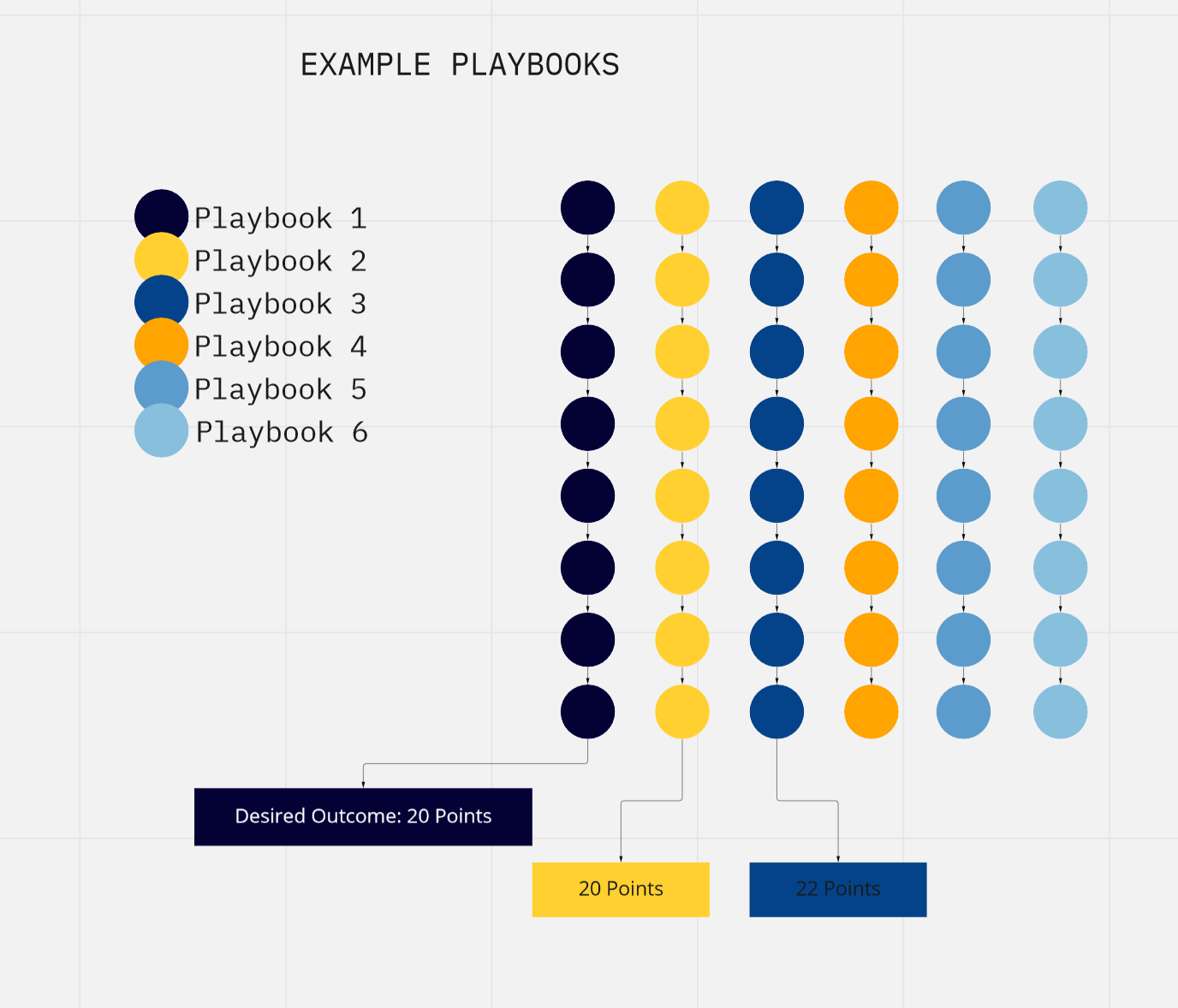
Playbooks are great for setting up a streamlined plan while engaging with the customer as a service provider. Automation is the key to setting up a playbook, and automated email circulation keeps the customer in reach. In addition, scheduling and defining timelines for actions creates excellent streamlining and allows adopting the service to customers' routines.
Reading the Journey
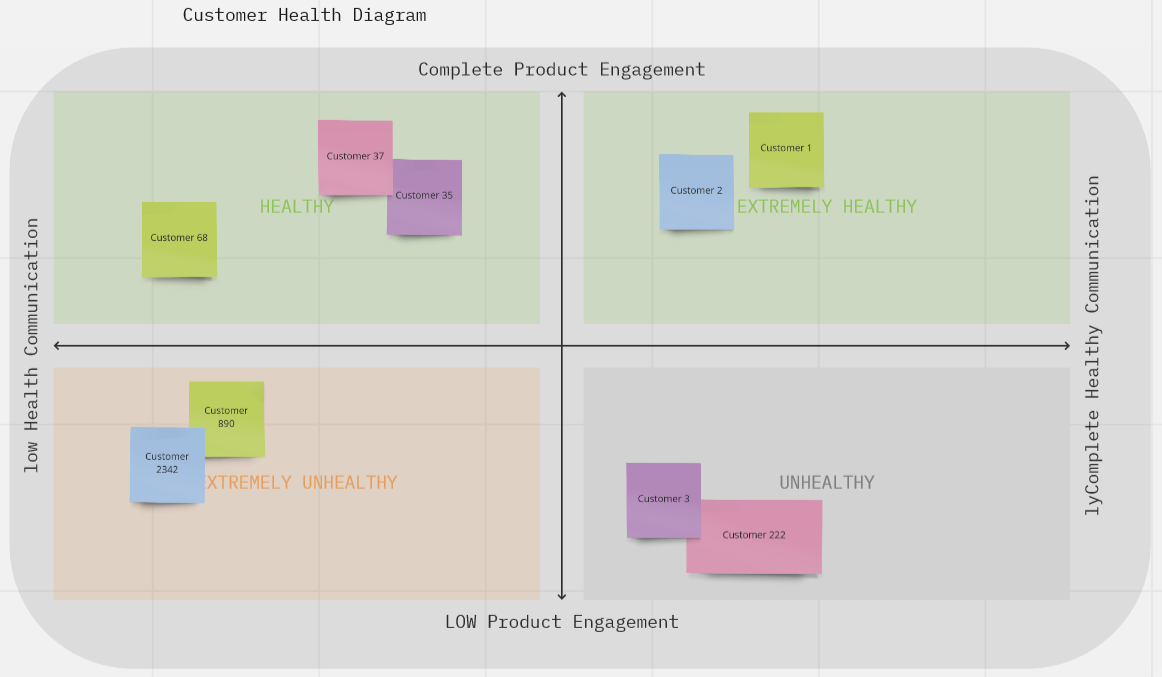
Each phase will leave a massive load of data to explore and understand the situation of the business relationship. To determine the relationships’ positioning, we must look at two different inputs; Product Engagement and Healthy Business Partnership.
Product Engagement is an input gathered from different data lines generated from product usage, spent time, achieved actions, integrations made, scheduled activities, and anything that can determine the customers’ engagement with the product is healthy or not.
Healthy Business Partnership Is the input that will show the communication between the customer and service provider. NPS, CSAT, and CLV scores are significant inputs to understanding communication between parties. In addition, being an advocate or having a testimonial can add ten or more points to the information, and the customer will become a star! If you have successfully built this report, your customer base will be divided into there different categories;
● Churn; These are the customers that are highly unhealthy. They are not engaging enough with the product to get any value or output. Maybe they have too many bugs or obstacles to get around. At the same time, the Business Partnership is not working for both sides. CLV is low, and both parties are investing an excessive amount of time into the relationship. At this point, maneuvers are challenging to apply and very limited.
● Burns: The customers in this section are not whether not successful in product engagement or healthy business relationships. Either way, there should be an opportunity to be seized. If the opportunity is successfully achieved, they have the potential to become a star for the service.
● Stars: The stars will always shine bright, bright enough to be seen by others, for example, customers that they will be an advocate, an endorsement for the service provider and the business relationship.
Conclusion
The article explained a way to explore the Customer Success universe. Still, it's not the only way to explore. The SaaS world is snowballing, and there will be new tools and methodologies to understand business relationships better. Nonetheless, the article shows a great start, a method of entering Customer Success, not just with a single department, embracing the Success ideology as a whole company.